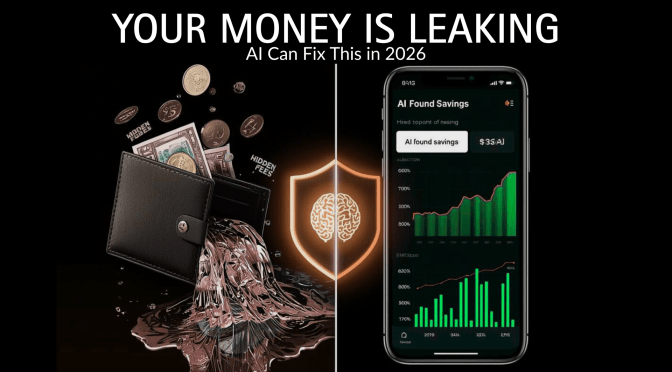
In 2026, Artificial Intelligence (AI) is no longer just a buzzword. It’s becoming a practical tool for everyday financial health. From budgeting and expense tracking to forecasting future costs. AI is helping people identify financial leaks. It detects those small, often invisible wasteful spending habits and stops them before they drain your money.
Modern AI-powered tools offer more features than traditional spreadsheets or basic personal finance apps. They bring automation, personalized insights, and predictive intelligence to your financial life. These tools help you save more, spend smarter, and protect long-term goals. Let’s explore exactly how to use AI to plug financial leaks this year.
What “Financial Leaks” Really Are
Financial leaks are the tiny financial inefficiencies that silently erode your wealth over time. They include things like:
- Forgotten subscription fees
- Unplanned impulse purchases
- Unexpected seasonal expenses
- Budget categories consistently overspent
Left unchecked, these leaks add up — often month after month — without you realizing it.
AI can catch these leaks early and help you fix them before they balloon into big problems.
1. Use AI for Automatic Expense Categorization
One of the most basic ways AI helps plug leaks is by automatically categorizing your expenses. Traditional finance tracking requires manual sorting, which is tedious and often inconsistent.
AI tools like Mint, YNAB, PocketGuard, and Monarch Money now leverage machine learning. These tools intelligently group your transactions into categories like rent, groceries, subscriptions, and entertainment. These systems learn from your spending and adapt over time, offering you a clearer picture of where your money is really going without lifting a finger.
This does more than tidy up your bank statement. It’s a diagnostic tool that shows you precisely where your financial leaks appear most often.
2. Forecast Future Spending to Avoid Surprises
AI doesn’t just organize past transactions — it also forecasts your future spending. Advanced budgeting tools analyze patterns in your history and predict upcoming bills, seasonal spikes, or changes you might not have anticipated.
For example:
- Electricity costs may rise in summer months
- Insurance or tax payments could spike at certain times of year
- Travel or gifts may increase at specific seasons
AI alerts you before these expenses hit, giving you time to plan and save instead of reacting with stress.
This predictive insight prevents leaks by turning surprise costs into predictable elements of your financial plan.
3. Detect and Eliminate Wasteful Spending
One of the biggest silent financial drains for many households is wasted recurring expenses — especially subscriptions.
Studies show that the average U.S. adult spends upward of $1,000 per year on subscriptions they don’t even use.
AI-powered tools can automatically scan your accounts, identify recurring payments, and alert you to:
- Unused streaming services
- Forgotten memberships
- Old digital subscriptions
Some platforms, such as Rocket Money (formerly Truebill), go a step further. They negotiate bills on your behalf. This saves you money without requiring a phone call or hours of your time.
This is the type of financial leak that often goes unnoticed in manual budgeting. It quietly eats into your cash flow.
4. Build Personalized Budgets with AI Guidance
AI doesn’t just report on your money — it advises.
Smart budgeting tools use your actual data. They do not rely on generic categories. These tools build personalized budgets tailored to your income, your spending habits and goals.
Instead of one-size-fits-all rules (like “spend no more than 30% on food”), AI evaluates:
- What you actually earn
- How your spending habits change over time
- Where you regularly overspend
- What you genuinely need vs. want
This results in budgets that are realistic and actionable. It dramatically reduces the leaks that occur when you ignore budgets because they feel impossible to follow.
5. Detect Patterns and Behavioral Leak Triggers
Beyond simple numbers, AI excels at detecting patterns you might miss. Traditional budgeting can show you totals, but AI can tell you the story behind them.
For example:
- You spend more on dining out when stressed or during certain days of the week
- Groceries spike mid-month because planned meals aren’t followed
- Your shopping increases after a good bonus or tax refund
These behavioral leaks don’t show up in spreadsheets but AI can highlight them and offer personalized nudges to curb them.
⚠️ 6. Use AI Mindfully (Know the Limits)
While AI is powerful, it’s not perfect.
- It may miscategorize expenses occasionally
- It can only work with data you provide and permissions you grant
- It isn’t a human financial advisor and won’t understand emotions or long-term life goals like a person could.
Treat AI as a supercharged assistant, not a replacement for financial literacy or professional guidance. Use generated insights to inform decisions, not to make them blindly.
Practical Tools You Can Start Using Today
Here are some of the most effective AI tools for plugging financial leaks in 2026:
Expense Tracking & Budgeting
- Mint with AI categorization: Automatically maps categories and shows leaks.
- YNAB + AI insights: Adds predictive insights to a disciplined budgeting framework.
- PocketGuard: Shows exactly how much disposable income you have after essentials.
- Monarch Money: Combines budgeting and forecasting in one dashboard.
Subscription & Bill Management
- Rocket Money: AI uncovers and negotiates recurring charges.
- Emma: AI subscription scanning and personalized spending insights.
These tools collectively help you see leaks you never noticed — and make fixing them almost effortless.
Final Thoughts: Plug Leaks, Protect Wealth
AI in 2026 isn’t a futuristic luxury — it’s a practical solution to everyday financial leaks. By automating tracking, forecasting spending, identifying waste, and personalizing budgets, AI gives you financial clarity and control.
When used responsibly, AI can turn financial blind spots into actionable savings opportunities. It helps you protect what matters most and build lasting financial health.
- How to Use AI to Plug Financial Leaks in 2026

- How to Fund Your 2026 Adventures Without Guilt

- Identifying Good vs. Bad Influence: A Psychological Approach

- Millennials & Gen X: Breaking the Paycheck-to-Paycheck Cycle

- Castles, Coastlines & Cobblestones: Our Epic 11-Day UK Itinerary Through England & Scotland 🇬🇧

 Mind, Money & Adventures